


I have lived in my current home for 23 years. Yesterday, I attended my very first precinct meeting.
Yes, we technically had precinct chairs before. But they never worked the precinct. They never invited people to meetings. Nothing actually happened.
This time, I was invited as a guest speaker. And as I sat quietly listening to the discussion, something hit me like a ton of bricks. Something I already knew intellectually, but seeing it in real life made it unavoidable.
Democrats have no precinct strategy.
The conversation circled endlessly around how we could do things. Not what works. Not what already exists. Not what resources are available. Just an endless loop of reinventing the wheel, again and again, as if no one had ever done this before.
Then I stood up.
I showed them what Mothers Against Greg Abbott precinct chairs are already doing in some of our clubs. Real work. Real materials. Real action.
And then… WHAM.
The walls went up. The freakouts began.
My postcards had Mothers branding, not county Democratic branding. Suddenly, everything became about permission. Who needs to approved this? Who was allowed to do that? Whether we could even try something without running it through five layers of process.
The spiral accelerated. I wanted to crawl out of my own skin and sprint for the exit.
Democrats cannot get out of their own way.
I had free, effective materials and resources ready to go. And while they weren’t rejected outright, they weren’t wanted either. And here’s the part that should terrify us: if my precinct is spending more time debating process than using available tools, that means thousands of precincts across Texas are doing the exact same thing.
We are not under-resourced.
We are under-organized.
There is no real infrastructure. Just vibes and meetings about meetings.
This whole experience sent me straight back to Isaac Arnsdorf’s book Finish What We Started, specifically Chapter 2, where he breaks down the Republican Precinct Strategy.
It also finally pushed me to read Charles Duhigg’s New Yorker article, What MAGA Can Teach Democrats about Organizing and Infighting.
And yeah. My mind was blown.
Duhigg opens by comparing two 1980s movements: MADD and DARE. One worked. One didn’t. Why? Because there is a critical difference between mobilizing and organizing.
Mobilizing is about getting people to do a thing.
Organizing is about getting people to become the kind of people who do what needs to be done.
Every successful movement needs both.

Trust me, I learned this the hard way. Building Mothers Against Greg Abbott without mentors or a roadmap was brutal. The learning curve was steep. We’ve done well, but there is always more to learn. Always.
Duhigg argues that today’s Democratic Party is excellent at mobilizing and terrible at organizing. MAGA, on the other hand, is disturbingly good at organizing.
After their 2020 loss, Republicans immediately launched their Precinct Strategy. The same one Arnsdorf describes. They encouraged thousands of people to run for internal party leadership, become precinct chairs, sign up as poll workers, and run for office.
That strategy is a major reason Donald Trump is back in the White House.
Duhigg points out something else uncomfortable. Republicans supported Barack Obama over John McCain at much higher rates than Democrats supported Hillary Clinton over Trump. That resulted in a nine-point advantage.
And last night in Texas, we saw Democrat Taylor Rehmet win a race in a +17 Trump district by 14 points, pulling over 57 percent of the vote with a seven percent turnout. That turnout was incredible. Volunteers and the community really came together.
Then Duhigg reminds us of something Democrats seem to have forgotten. Obama didn’t micromanage volunteers. He recruited tens of thousands of leaders and told them to do what they thought was best. They experimented. They shared results. They learned from one another.
That approach exceeded expectations and went viral because it was authentic.
It led to the book Groundbreakers: How Obama’s 2.2 Million Volunteers Transformed Campaigning in America, which is now required reading for Tea Party leader Bill Montgomery and Turning Point USA founder Charlie Kirk.
Yes. Republicans studied Democratic success while Democrats… reinvented the wheel.
“Republicans have created broad ideological coalitions,” Duhigg writes, “something Democrats, who tend to rely on litmus tests around abortion, social justice, and other issues, often have not achieved.”
Sarah Longwell puts it bluntly. MAGA has “done a fantastic job of welcoming anyone who puts on the red hat. That’s the only requirement. You just have to think Trump is great.”
Meanwhile, MAGA focuses relentlessly on community.
“You know how we heal our divides?” Charlie Kirk says. “By talking to people we disagree with.”
Young leaders inside that movement are being trained to talk to everyone. Arguing does not mean hatred. Disagreement does not mean exile.
Duhigg lands the punch: Democrats should be learning how to build small, socially interconnected communities. Instead, we often demand perfect language, perfect positions, and perfect behavior and punish anyone who steps out of line.
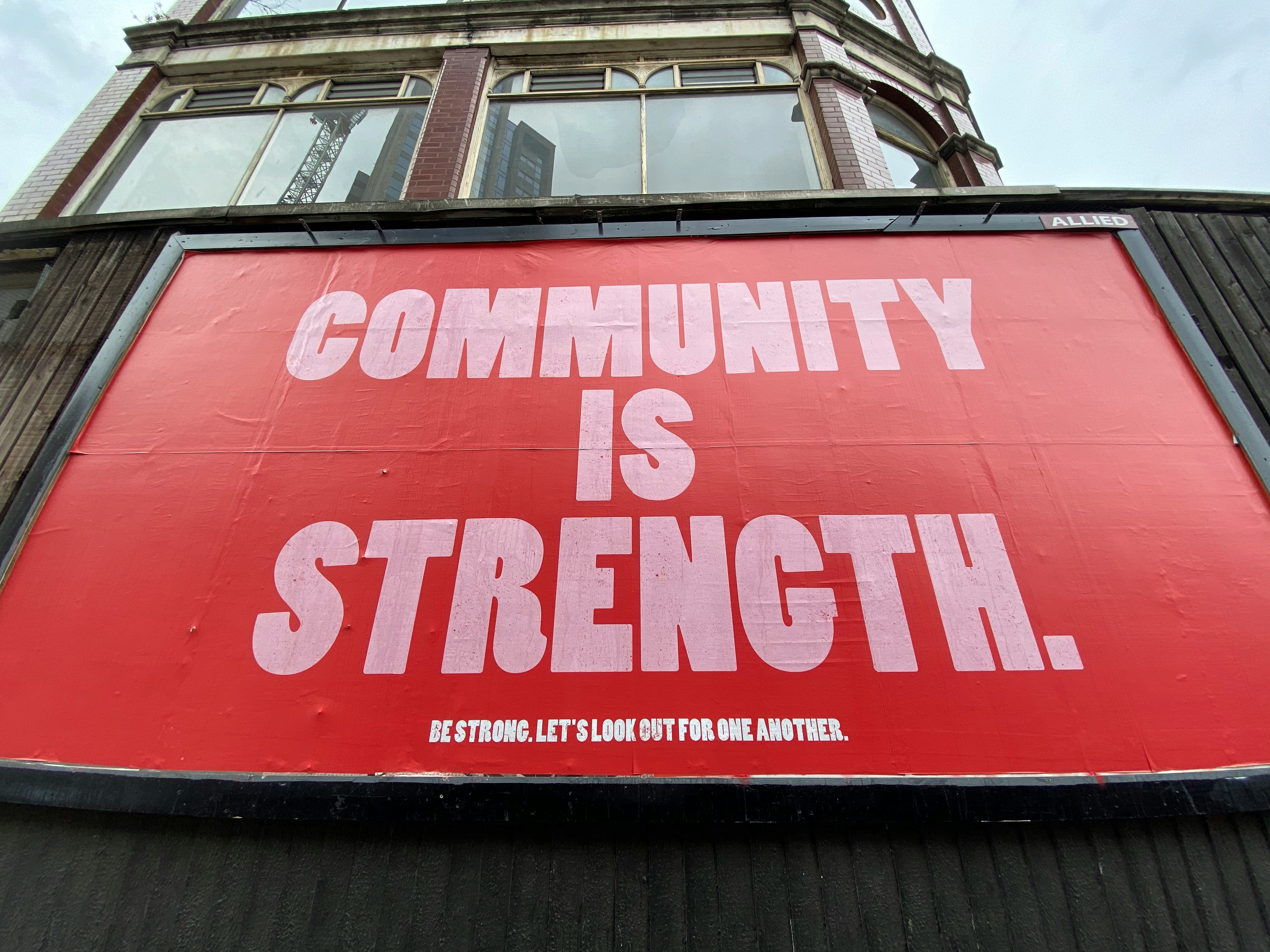
We can mobilize massive crowds for the Women’s March or No Kings protests. But when people go home, we leave them alone.
There is no community waiting for them.
So let’s come back to precincts.
Are we doing this wrong? Should precincts look more like neighborhood socials? Tea and politics. Potlucks and purpose. Small, human spaces where people belong.
Can we build infrastructure and guidance without strangling initiative? Can we trust precincts to experiment and then share what works?
How do we start small and still win big?
Things to ponder.
Yours in resistance,
Nancy Thompson
PS> I ordered the Groundbreakers book.
Great points that express how I've been feeling. In 2020 so many of us were relieved Trump lost that we failed to realize that they were organizing to ensure their comeback. They have been playing the long game politically since Obama and even longer on the Christian nationalist agenda (since the 80s). We have to learn what organizing means and execute it. I'll get that book that you referenced. I've been reading the book "Democracy in Retrograde" which I also recommend.
Mothers postcards plus Ellis County Dem ones where the only ones I had in 2024. No strategy nothing. I am changing that, precinct by precinct with actual vote goals. In order the flip Texas, CD 6 needs to recruit 100 new chairs across our district. I am running for SDEC because this is what I am already doing, since 2024 I have recruited actual working precinct chairs in our 5 counties, I have even recruited ones for Denton, Travis, Collin and Williamson. But I hold my chairs accountable. I give them goals, I raise money to make sure they have lit and postcards for every election. TDP is stepping up. They are helping. But I can tell you, there is only a strategy from TDP because I worked my ass off to get Kendall elected. And demand an actual winning strategy. I don’t ask for permission. Want to know how many doors I have knocked on in do nothing PC chairs? Lots. And I am done. I will recruit and recruit and if you aren’t doing something in your precinct to win the election then should lose your job. Welcome to the real world. This isn’t something we do for glamor.