


Today is the Fourth of July, and it has always been a difficult day for me.
Not because I’m not a proud American. I am.
It’s difficult because today is the anniversary of the death of the first man I ever loved: my Grandfather Ito (short for abuelito). Every Fourth of July, I tend to go quiet. I spend the day reflecting, meditating, and, in my own way, talking to my grandfather.
So naturally... I fell down a rabbit hole.
I’m exceptionally talented at finding rabbit holes. (It’s practically a superpower.)
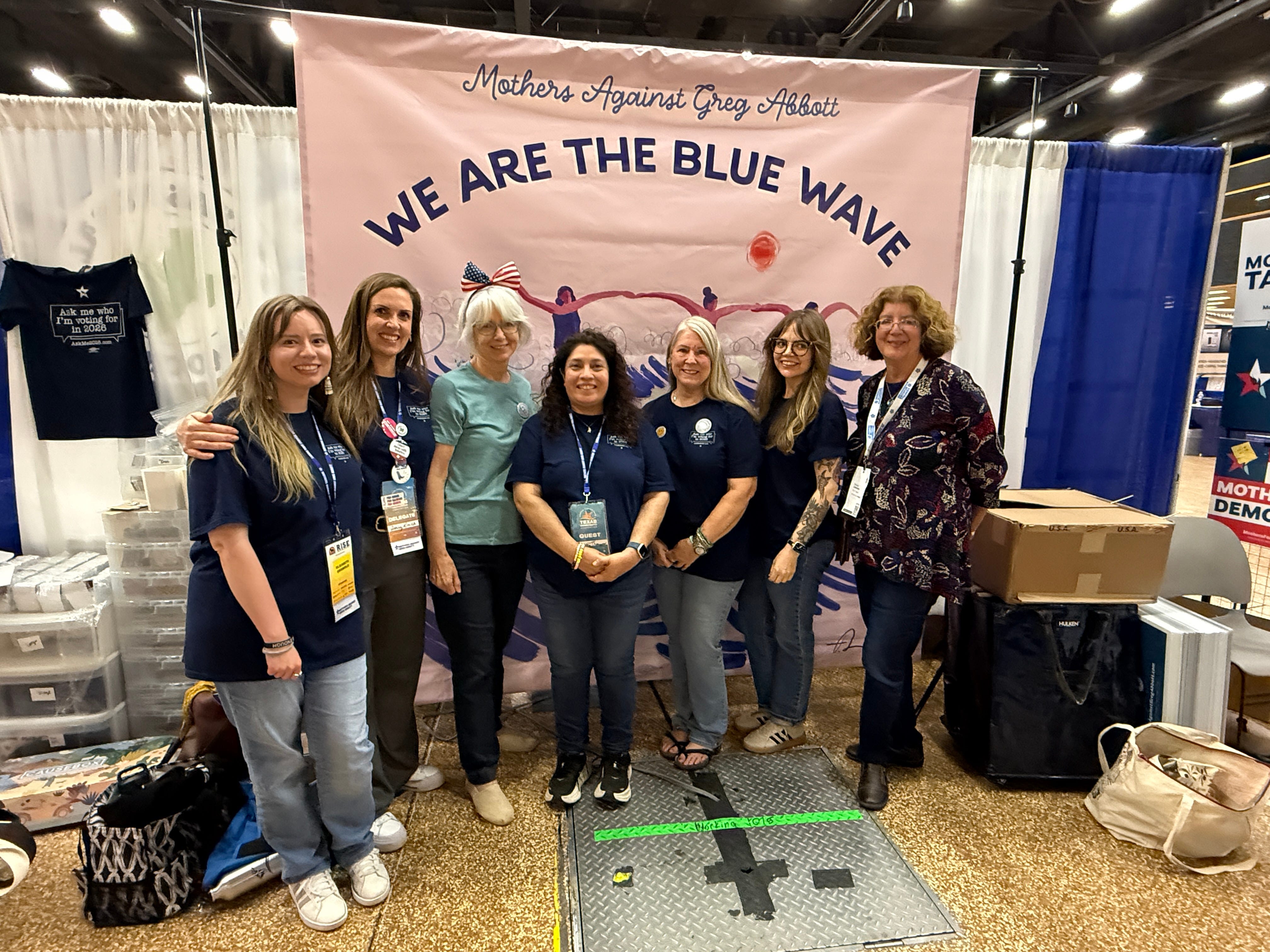
I just returned from the Texas Democratic Convention, and overall, I felt really good. Really good. I love our volunteers. Our team worked incredibly well together. We learned from past conventions, planned ahead, had enough inventory, enough volunteers, and enough organization. It felt energizing.
We have focus. We have purpose. We’re doing meaningful work. And I genuinely believe in what we’re building for Texas families.
But...you knew there was a “but” coming.
I couldn’t shake the feeling of déjà vu.
While many of us spent months learning from previous mistakes and improving how we organize, I watched others repeat familiar patterns.
Some candidates understood that campaigns are built one conversation at a time.
Clayton Tucker, who’s running for Texas Land Commissioner, spent nearly every spare moment at his booth talking with volunteers, county chairs, precinct chairs, activists, donors, and anyone who stopped by. Vikki Goodwin and Sarah Eckhardt did the same. Nathan Johnson and Jon Rosenthal were constantly walking the convention floor, meeting people and taking photos.
Ben Flores had just finished chemotherapy, so he understandably needed to be careful around large crowds.
But I kept wondering: where were Gina Hinojosa and James Talarico?
Both campaigns had booths. James’s booth packed up early Saturday, and by late morning there wasn’t much activity. Gina’s team kept their booth running, and I proudly bought and wore my Gina T-shirt. But I had hoped to actually see her there.
This isn’t about criticizing two candidates. It’s about something bigger.
Campaigns are built through relationships.
Volunteers don’t just knock doors. They become donors. Donors become organizers. Organizers recruit more volunteers. County chairs become validators. Precinct chairs become neighborhood leaders.
Those relationships don’t happen by accident. They happen because candidates show up. Being at convention and accessible would have really helped both of their campaigns so much.
One of the things I loved about our Blue Wave Happy Hour was seeing so many candidates make the effort to be there.
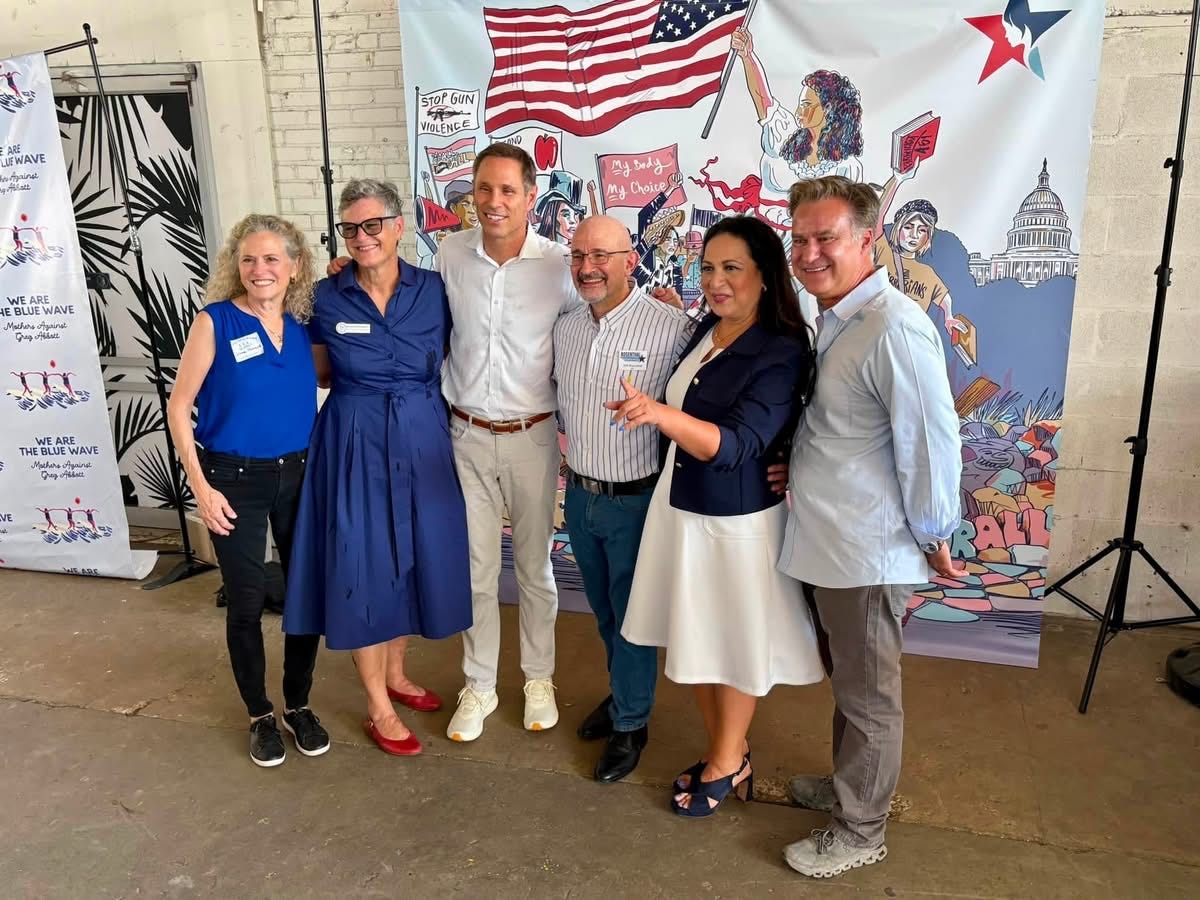
Donna Howard came. Vikki Goodwin came, Sarah Eckhardt came.
My friends Christina Morales, Roland Gutierrez, Nathan Johnson, and Jon Rosenthal, and Clayton Tucker came. Dozens of candidates I have worked with over the past year showed up.
The patio was packed, well over 500 people, and there was an incredible amount of energy, laughter, and hope.
If there’s one lesson I’ve learned since founding Mothers Against Greg Abbott in 2021, it’s this:
Show up for the people who show up for you.
Politics isn’t transactional. It’s relational.
That lesson kept coming back to me during convention. I am so committed to so many of you candidates out there!
Over and over I heard candidates express uncertainty about what the coordinated campaign actually looked like this cycle. Good trainings were happening. There were dedicated people doing excellent work. But many candidates also described the effort as feeling disconnected and lacking a visible statewide organizing strategy.
As I drove home from Corpus Christi, I kept thinking about one book:
Groundbreakers: How Obama’s 2.2 Million Volunteers Transformed Campaigning in America by Elizabeth McKenna and Hahrie Han.
The book isn’t really about Barack Obama.
It’s about organizing. It’s about how ordinary people became leaders who recruited more leaders, who recruited even more leaders. That’s how movements grow. That’s how campaigns win.
Too often in Texas, it feels like we’re trying to reinvent the wheel every election cycle.
We don’t have to.
There are proven models that have already shown how to build a statewide volunteer movement capable of changing elections. Text messages matter. Social media matters. Digital ads matter. But none of those replace neighbors talking to neighbors.
None of them replace community. None of them replace trust.
We’re not going to win Texas by sitting on our couches hoping an algorithm saves democracy. We’re going to win by building the biggest grassroots organizing effort this state has ever seen.
That’s exactly what I plan to focus on next.
I just finished Groundbreakers, and this week I’ll begin rolling out a new organizing framework through Mothers Against Greg Abbott. My hope is simple: create a volunteer-driven ground game that helps every Democratic candidate in Texas—not just one campaign, but all of them.
Because that’s how movements are built.
One conversation. One volunteer.
One neighborhood. One relationship at a time.
I was 6 years old when America turned 200, and I was so proud at my local town’s parade and events. I still have a 1976 quarter and memories of a proud Latino family celebrating being American. Wishing you and your family a very Happy 4th of July.
Yours in Patriotism,
Nancy Thompson
I’m surprised that James Talarico was a no-show. His ads are blowing up on my TV and anything that requires WiFi. Maybe he’ll read this article and do better in the future.🙏
I’ve been disappointed at how absent Gina Hinojosa campaign has been. At last James is out there beating the pavement.